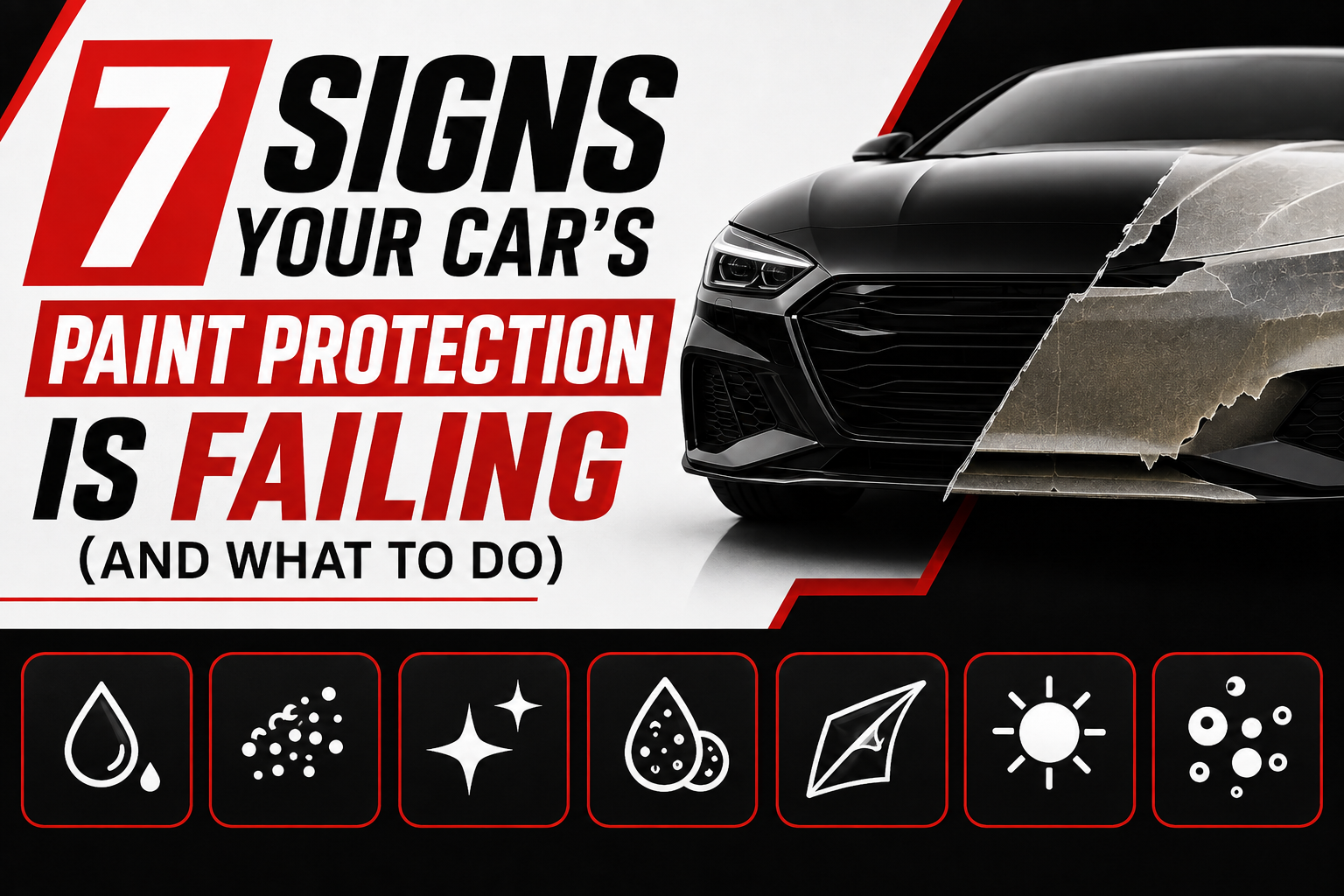
Ceramic coating and PPF don’t fail overnight, they degrade gradually, often so slowly that owners don’t notice until the protection is significantly weaker than it used to be. In Sharjah’s demanding climate, catching these early signs matters, since addressing them promptly is far more cost-effective than waiting until the underlying paint has suffered real damage.
Here are the seven signs we tell every customer to watch for, and what each one actually means.
Sign 1: Water No Longer Beads Tightly
One of the clearest indicators of ceramic coating health is how water behaves on the surface. Fresh, well-performing coating causes water to bead into tight, defined droplets that roll off easily. When the coating starts wearing down, water begins sheeting flatter across the surface instead of beading, a sign the hydrophobic top layer is degrading, even if the underlying protection is still partially intact.
Sign 2: Dirt and Dust Stick More Than They Used To
A properly functioning ceramic coating makes surfaces noticeably easier to clean, dirt and dust have less to grip onto due to the smooth, hydrophobic finish. If you notice your car seems to attract and hold onto grime more than it did when the coating was fresh, particularly requiring more scrubbing during washes, this is a practical sign the coating’s performance is declining.
Sign 3: Reduced Gloss and Depth of Color
Ceramic coating enhances and protects paint’s natural gloss and color depth. As the coating wears, this enhanced gloss gradually fades, and the paint can start looking flatter or less vibrant than it did immediately after application, even without any new scratches or visible damage.
Sign 4: Water Spots Forming More Easily and Etching In
While no coating is completely immune to water spots, especially with Sharjah’s hard water, a well-maintained coating resists them significantly better than bare paint. If water spots are forming more frequently and becoming harder to remove, sometimes appearing to etch into the surface rather than wiping away easily, this suggests the coating’s protective barrier is thinning.
Sign 5: Visible Lifting or Peeling at PPF Edges
For PPF specifically, edge lifting is one of the earliest and most visible signs of failure. This typically starts at high-friction points like door edges, mirror bases, or bumper corners, where the film experiences the most flexing and handling over time. Left unaddressed, lifted edges allow dirt and moisture underneath, which accelerates further peeling and can trap contaminants against the paint.
Sign 6: Yellowing or Discoloration of PPF
Quality PPF is engineered to resist yellowing, but lower-grade film, or film nearing the end of its lifespan, can develop a visible yellow or hazy tint, particularly on horizontal surfaces like the hood that receive the most direct UV exposure. This discoloration is a clear sign the film’s protective properties are breaking down and it’s likely time for replacement.
Sign 7: Bubbling or Cloudy Patches Under the Film
Trapped moisture or air under PPF can create visible bubbles or cloudy patches, particularly if the film was applied incorrectly or has aged past its effective lifespan. This isn’t just a cosmetic issue, trapped moisture underneath the film can potentially affect the paint beneath if left unresolved for extended periods.
Why Catching These Signs Early Matters in Sharjah
Sharjah’s heat and UV intensity accelerate the breakdown of both ceramic coating and PPF compared to milder climates, which means these signs can appear somewhat sooner than the coating or film’s theoretical maximum lifespan might suggest. Addressing early signs, through a maintenance top-up for coating or a partial PPF section replacement, is significantly less costly than waiting until the underlying paint has been exposed to unprotected conditions for an extended period.
Common Mistakes Owners Make
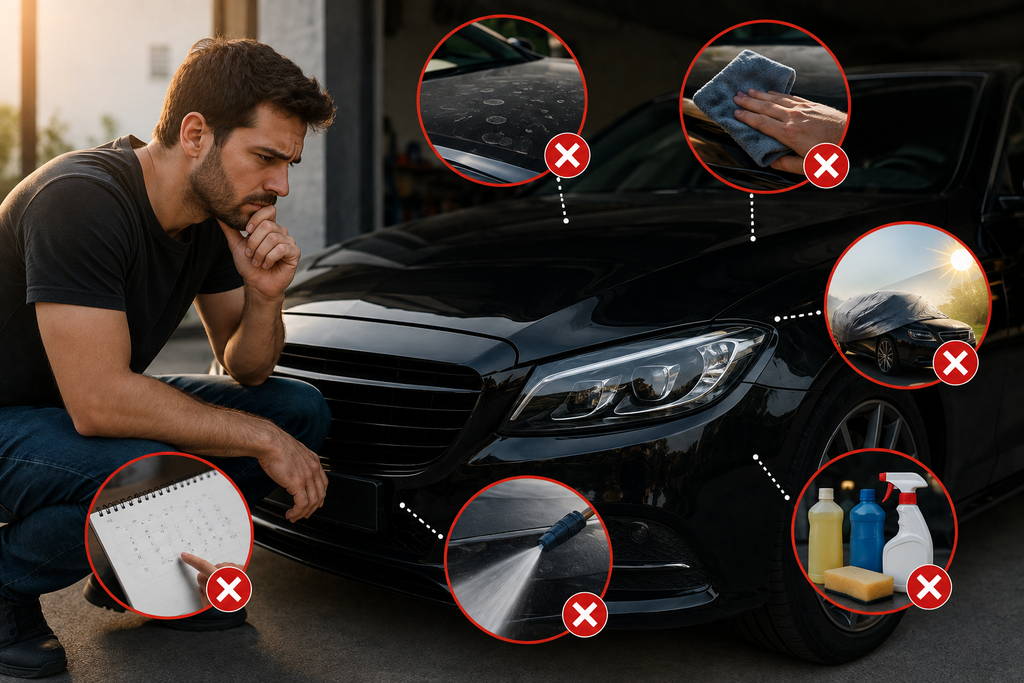
Many owners wait too long to address these signs, assuming visible protection has to fail completely before anything needs attention. In reality, a coating showing early signs of wear is still providing partial protection, but addressing it with a professional inspection and potential top-up treatment extends the overall protection lifespan far more efficiently than waiting for complete failure.
Another common mistake is misdiagnosing the cause. Reduced water beading, for example, can also result from using non-coating-safe wash products rather than actual coating degradation. A professional inspection can distinguish between a maintenance issue and genuine coating wear, preventing unnecessary reapplication costs when a change in washing products would solve the problem.
Important Factors to Consider
Consider your car’s exposure conditions when interpreting these signs. A vehicle parked outdoors under direct Sharjah sun daily will show wear signs sooner than one kept in covered parking, simply due to the difference in cumulative heat and UV exposure, this doesn’t necessarily indicate a problem with the original application quality.
Also consider the age of your coating or film relative to its expected lifespan. Signs appearing within the expected timeframe suggest normal wear requiring routine maintenance, while premature signs well before the expected lifespan may indicate an application or product quality issue worth investigating with the original installer.
Best Practices and Expert Recommendations
We recommend a professional inspection at the first sign of any of these seven indicators, rather than waiting to see if the issue worsens. Early intervention, whether that’s a coating maintenance treatment or a targeted PPF section repair, is almost always more cost-effective and less disruptive than addressing complete failure later.
Routine annual inspections, even without obvious signs of wear, also help catch subtle changes before they become visually apparent, extending the effective protective lifespan of both coating and film investments.
How Professional Inspection Helps
A professional can accurately distinguish between coating wear, maintenance product issues, and environmental factors that might mimic degradation signs without indicating genuine failure. This diagnostic accuracy prevents unnecessary spending on premature reapplication while ensuring genuine wear is addressed before it compromises the underlying paint protection.
Why Choose Alfaan Auto Care
Alfaan Auto Care offers professional inspection services to assess exactly where your ceramic coating or PPF stands, whether that’s confirming everything is performing well, recommending a maintenance top-up, or identifying a section that needs attention. We provide honest assessments, never recommending a full reapplication when a simpler maintenance treatment would restore performance just as effectively.
Our team applied your original coating or film with the same attention to detail we bring to every inspection, understanding exactly how these products should perform under Sharjah’s specific conditions.
Our Service Process
- Free visual inspection of coating or PPF condition
- Water beading and gloss assessment
- Close inspection of PPF edges and high-friction areas
- Honest recommendation between maintenance, top-up, or replacement
- Professional treatment based on your car’s actual needs
Frequently Asked Questions
How long should ceramic coating last before showing wear signs? Depending on the product grade, professional ceramic coating typically performs well for two to five years, though Sharjah’s heat can accelerate this timeline somewhat compared to milder climates.
Is it normal for PPF to show some lifting after a few years? Some edge wear over time is common, especially at high-friction points, but significant lifting or bubbling well before the film’s expected lifespan may indicate an installation issue worth investigating.
Can I fix water spot etching myself? Light water spots can sometimes be addressed with proper water spot removal products, but more significant etching into the coating or paint typically requires professional correction.
Does reduced water beading always mean my coating has failed? Not necessarily. It can also result from using non-coating-safe wash products. A professional inspection can determine whether it’s a maintenance issue or genuine coating degradation.
Should I replace the whole PPF if only one section is lifting? Often, a targeted repair or partial section replacement is sufficient rather than replacing the entire film, depending on the extent and location of the issue.
Conclusion
Ceramic coating and PPF degrade gradually, and catching the early signs, reduced water beading, dulling gloss, lifting edges, or yellowing, allows for cost-effective maintenance rather than waiting until your paint’s protection has genuinely failed. Regular inspection is the simplest way to make sure your investment keeps performing the way it should.
Book a Protection Inspection
Noticing any of these signs on your car? Call Alfaan Auto Care at +971528105044 or message us on WhatsApp for a free inspection and honest recommendation.