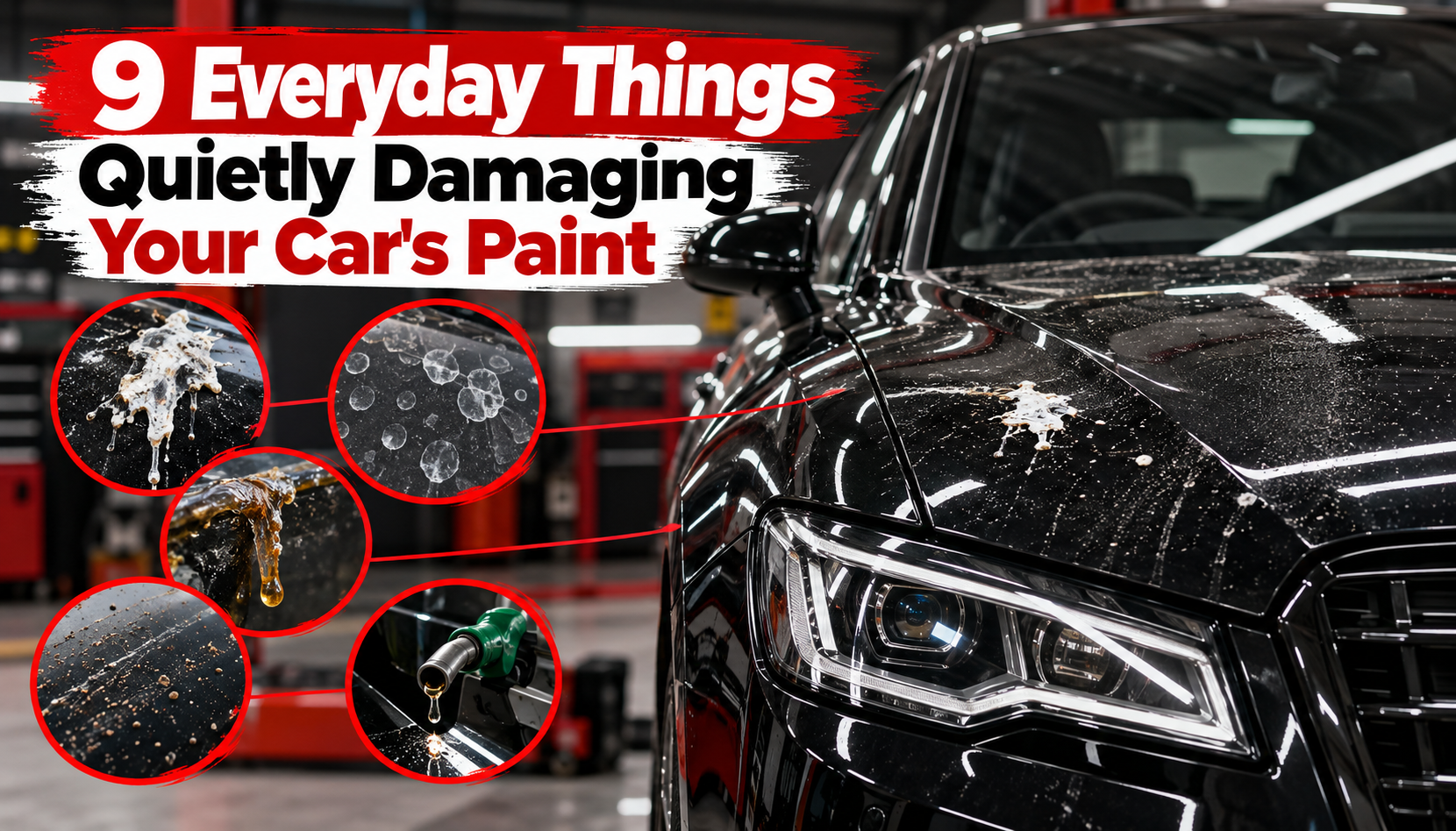
Most paint damage does not come from dramatic events like accidents or vandalism. It comes from ordinary, everyday substances that land on your car, sit there for a few hours or days, and chemically etch into the clear coat before you get around to washing it off. Knowing exactly which things that damage car paint deserve urgent attention, and which can wait until your next wash, is genuinely one of the most useful pieces of car care knowledge an owner in Sharjah can have.
Here are the nine we see causing the most avoidable damage.
1. Bird Droppings
This is the most underestimated paint threat of all. Bird droppings are highly acidic and, critically, they harden as they dry. In Sharjah’s heat, a dropping left on a sunlit panel can begin etching into the clear coat within hours rather than days, because heat accelerates the chemical reaction significantly.
The damage often appears as a dull, slightly textured mark that remains visible even after the dropping is removed, because the etching has occurred beneath where it sat. Bird droppings should be removed as soon as you notice them, using a damp microfibre or a quick detailer spray rather than scrubbing at hardened residue dry.
2. Hard Water Spots
Water in this region carries a high mineral content. When water droplets dry on paint under direct sun, the water evaporates and leaves those minerals behind as a visible spot. Left repeatedly, these mineral deposits can etch into the clear coat, creating rings that no longer wash off.
This is exactly why drying your car with a microfibre towel or blower after washing matters, and why washing during the hottest part of the day is counterproductive, water evaporates before you can dry it.
3. Tree Sap and Resin
Parking under trees for shade seems sensible, and in terms of UV protection it genuinely helps. The trade-off is sap and resin, which bond aggressively to paint and harden quickly in heat. Once hardened, sap is difficult to remove without either chemical assistance or, if attempted incorrectly, scratching the surrounding paint.
4. Insect Residue
Bug splatter accumulated during highway driving is acidic and, like bird droppings, bakes onto the surface under sun. The front bumper and bonnet leading edge take the worst of it. Removing insect residue promptly after a longer drive prevents it from etching, particularly during warmer months.
5. Fuel Spills at the Filler Cap
A very common and rarely discussed one. Fuel that overflows or splashes down the side of the filler area strips wax, sealant, and can stain or dull the paint around the filler cap over repeated occurrences. If you notice a spill, rinse it off rather than letting it evaporate on the paint.
6. Airborne Industrial and Iron Fallout
Tiny metallic particles from brake dust, construction activity, and industrial areas settle on paint and embed in the clear coat. Over time they oxidise, creating small rust-coloured specks that feel rough to the touch and cannot be removed by ordinary washing. This is precisely what clay bar treatment and iron fallout removers are designed to address, and it is why periodic professional decontamination matters even for regularly washed cars.
7. Automated Car Wash Brushes
Not a substance, but a genuine and frequent cause of damage. Brush-based automated washes accumulate grit from every vehicle that passed through before yours. Those particles then get dragged across your paint, producing the fine circular swirl marks that dull a finish over time. Touchless automated washes avoid this problem, and proper hand washing avoids it entirely.
8. Dry-Wiping Dust
The single most damaging routine habit in this region. Wiping dust off a dry panel with a cloth, towel, or hand drags abrasive sand particles directly across the clear coat. It feels harmless and looks effective, and it is quietly responsible for a large share of the swirl marks we see on Sharjah vehicles. Always use a lubricating detailer spray if removing dust between washes.
9. Harsh Household Cleaners
Dish soap and general-purpose household detergents are formulated to strip oils and grease aggressively. Used on a car, they strip any protective wax, sealant, or coating present, leaving the paint exposed. Repeated use also contributes to accelerated clear coat degradation. Automotive pH-neutral shampoo exists for good reason.
Why Reaction Time Matters So Much in Sharjah
The common thread across almost all of these is that heat accelerates chemical damage. The same bird dropping that might take days to etch paint in a mild European climate can begin etching within hours on a sunlit panel in a Sharjah summer. This means the practical advice differs here: contaminants that could reasonably wait until the weekend elsewhere genuinely should not wait here.
Keeping a quick detailer spray and a clean microfibre towel in the boot is a small, inexpensive habit that prevents a disproportionate amount of permanent damage.
How Protective Coatings Change the Equation
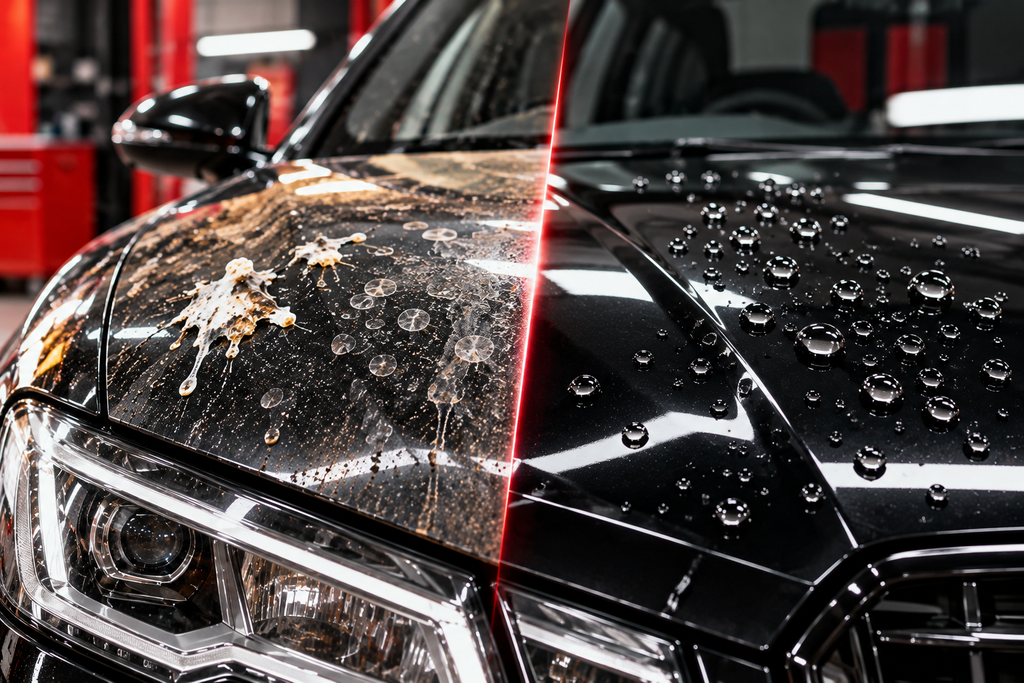
Ceramic coating does not make paint immune to any of these substances, but it changes the timeline meaningfully. A coated surface provides a sacrificial barrier that the contaminant must degrade before reaching the clear coat, buying considerably more time before permanent etching occurs. The hydrophobic surface also means contaminants adhere less strongly and release more easily during washing.
PPF offers similar benefits on covered panels, with the additional advantage that the film itself takes the chemical damage rather than your paint, and can be replaced if it ever becomes stained.
Important Factors to Consider
Where you park changes your exposure profile considerably. Parking under trees increases sap and bird dropping risk while reducing UV exposure. Parking near construction or industrial areas increases iron fallout. Understanding your own exposure pattern helps you prioritise which of these nine actually apply to your daily situation.
How Professional Decontamination Helps
Some contamination, particularly embedded iron fallout and bonded industrial deposits, cannot be removed by washing regardless of technique. Professional decontamination combines chemical iron fallout removers with clay bar treatment to physically lift embedded particles from the clear coat. This is typically worth doing a couple of times a year, and it is always the necessary first step before any coating is applied.
Why Choose Alfaan Auto Care
Alfaan Auto Care performs full decontamination as a standard part of every protective service, never applying coating over contaminated paint. Our technicians can identify whether a mark is surface contamination that will lift with proper treatment, or etching that has already reached the clear coat and requires correction, an important distinction that determines what your car actually needs.
We are also happy to advise on realistic prevention habits suited to where you actually park and drive, rather than generic advice that ignores local conditions.
Our Service Process
- Free inspection to identify contamination versus etching
- Chemical iron fallout and tar removal
- Clay bar decontamination to lift embedded particles
- Machine polishing where etching has already occurred
- Protective coating application to reduce future damage
- Practical prevention guidance for your parking situation
Frequently Asked Questions
How quickly do bird droppings damage car paint? Faster than most owners expect. In direct sun and high temperatures, etching can begin within hours, which is why prompt removal matters far more in this climate than in cooler regions.
Can water spots be removed once they have formed? Light, recent water spots often come off with a dedicated water spot remover. Spots that have etched into the clear coat require machine polishing to correct.
Is it safe to remove tree sap myself? With a proper dedicated sap remover and a soft microfibre, yes. Scraping or scrubbing hardened sap dry risks scratching the surrounding paint.
Does ceramic coating prevent all of this damage? It significantly slows chemical etching by providing a sacrificial barrier and makes contaminants easier to remove, but prompt removal of substances like bird droppings is still recommended.
How often should I get professional decontamination done? Roughly twice a year suits most regularly driven vehicles in Sharjah, and it is always necessary before applying any protective coating.
Conclusion
Most permanent paint damage happens gradually, from ordinary substances left sitting a little too long on a hot panel. Knowing which contaminants require immediate attention, keeping a detailer spray on hand, and maintaining a protective coating together prevent the vast majority of the etching and staining we see on Sharjah vehicles.
Get Your Paint Properly Decontaminated
Noticing marks that will not wash off? Call Alfaan Auto Care at +971528105044 or message us on WhatsApp for a free paint inspection.