Most owners in Sharjah focus their car care attention on the exterior, paint, coating, wheels, while the interior quietly suffers the worst damage of all. Car interior heat damage in the UAE is one of the most common and most expensive forms of vehicle deterioration, and unlike faded paint, a cracked dashboard or split leather seat cannot be polished back to life.
Here is exactly what happens to your cabin during a Sharjah summer, and what genuinely prevents it.
What Heat Damage Actually Does Inside a Car
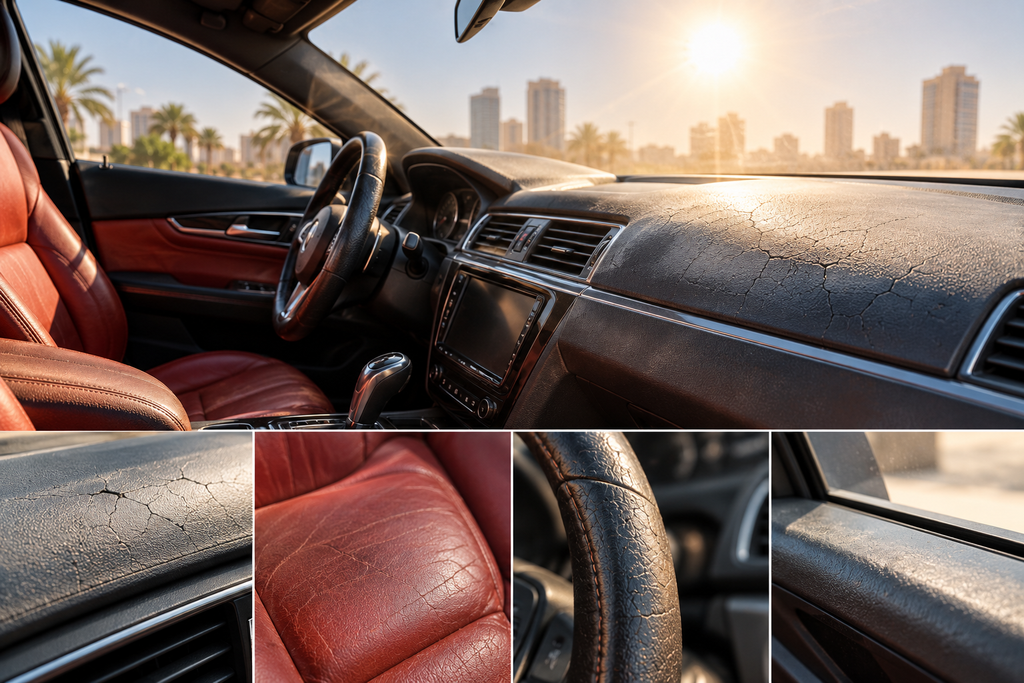
A vehicle parked in direct sun acts as a greenhouse. Sunlight enters through the glass, converts to heat, and becomes trapped inside the cabin. Interior temperatures in a closed car parked outdoors in a Sharjah summer can climb dramatically above the outside air temperature within a surprisingly short period, and surfaces receiving direct sunlight, particularly the dashboard top, reach considerably higher temperatures still.
At these temperatures, the plasticisers that keep dashboard vinyl and plastic trim flexible begin evaporating. As they leave the material, the plastic becomes progressively more brittle. Combined with the daily expansion and contraction cycle of heating up and cooling down, this brittleness eventually produces the cracks and warping seen on so many older vehicles here.
Leather suffers differently. Heat and UV together strip the natural oils from leather hide, causing it to dry, stiffen, lose colour, and eventually crack along stress points such as seat bolsters and the driver’s seat base.
Why This Matters More Than Most Owners Realise
Interior damage is disproportionately expensive to fix relative to how it happens. Replacing a cracked dashboard often involves substantial labour to access and remove it. Reupholstering or replacing leather seats is similarly costly. Both are repairs that a modest preventative routine would have avoided entirely.
Interior condition also weighs heavily in resale valuation. A buyer inspecting a car will spend far longer sitting inside it than walking around it, and a cracked dashboard, faded trim, or hardened seats immediately undermine confidence in how the vehicle has been cared for overall.
The Areas That Suffer First
Dashboard top surface. This receives the most direct, prolonged sunlight of any interior surface and is almost always the first area to show cracking or discolouration.
Steering wheel. Frequently overlooked, but leather or synthetic wheel coverings dry, crack, and become sticky or shiny with combined heat and hand oils.
Front seat upper surfaces and headrests. Particularly on the driver and passenger seats, these receive direct sun through the windscreen and side glass.
Door card tops and window sills. Sit directly in the sun’s path for much of the day.
Rear parcel shelf. In sedans, this is a heavily exposed horizontal surface that fades and warps but is rarely inspected by owners.
Common Mistakes That Accelerate Interior Damage
Skipping a windscreen sunshade. A simple reflective sunshade is one of the highest-value, lowest-cost interventions available, and yet many owners use one only occasionally or not at all.
Using silicone-based “shine” dashboard sprays. These products create a glossy appearance but many contain solvents that actually accelerate plasticiser loss over time, and the resulting high-gloss surface increases windscreen glare. A matte, UV-protectant conditioner is the better choice.
Never conditioning leather. In this climate, leather requires conditioning on a genuinely regular schedule, not once every couple of years. Untreated leather in Sharjah dries out far faster than in temperate climates.
Assuming factory tint is sufficient. Standard factory glass provides limited heat and UV rejection. Quality aftermarket tinting with a genuine heat-rejection specification makes a substantial difference to cabin temperature and UV exposure.
Leaving items on the dashboard. Beyond being a safety issue, objects left on the dashboard create uneven heating and can leave permanent marks or discolouration on the surface beneath.
Important Factors to Consider
Your parking situation is the single largest variable. A car in covered or basement parking experiences dramatically less interior heat stress than one parked in an open lot all day. If covered parking is unavailable, the value of sunshades and quality tinting increases proportionally.
Material type also matters. Genuine leather requires conditioning but responds well to it. Synthetic leather and vinyl surfaces need UV protection more than moisturising. Fabric upholstery is less prone to cracking but fades noticeably and absorbs odours more readily in heat and humidity.
Best Practices and Expert Recommendations
Use a reflective windscreen sunshade every single time you park outdoors, not just on the hottest days. Consistency is what compounds the benefit over years of ownership.
Condition leather surfaces on a regular schedule rather than reactively once they already feel dry, since conditioning restores oils far more effectively before the material has hardened.
Apply a quality UV-protectant dressing to dashboard, door cards, and plastic trim, choosing a matte finish product over a high-gloss silicone spray.
Invest in quality window tinting with a genuine heat-rejection rating, ensuring it complies with UAE VLT regulations, as it protects every interior surface simultaneously and improves cabin comfort at the same time.
Crack windows very slightly when safely parked in a secure location, allowing some heat to escape rather than building up completely unventilated.
How Professional Interior Detailing Helps
Professional interior detailing goes considerably beyond cleaning. It includes deep extraction of embedded dust from seat seams and vents, application of proper UV-protectant treatments formulated for automotive surfaces rather than general-purpose products, and leather conditioning using products matched to your specific upholstery type.
Professionals can also identify early-stage damage, leather beginning to stiffen, trim showing initial UV discolouration, at a point where treatment still prevents progression, rather than after cracking has already begun and become irreversible.
Why Choose Alfaan Auto Care
Alfaan Auto Care treats interiors with the same seriousness we bring to paintwork, because in Sharjah’s climate the cabin genuinely takes as much punishment as the exterior. We use premium-grade, automotive-specific interior products safe for leather, modern soft-touch plastics, and technology-heavy dashboards.
We also offer window tinting installed to comply with UAE regulations, addressing the root cause of interior heat exposure rather than just treating its symptoms.
Our Service Process
- Free interior inspection and assessment of current condition
- Deep vacuum and steam cleaning of upholstery and carpets
- Seat seam, vent, and crevice extraction
- Leather cleaning and conditioning matched to your upholstery type
- UV-protectant application to dashboard, trim, and door cards
- Window tinting consultation and installation if required
Frequently Asked Questions
How hot does a car interior actually get in Sharjah summer? Cabin temperatures in a closed car parked in direct sun rise significantly above outside air temperature, with directly sunlit surfaces like the dashboard reaching considerably higher still.
How often should I condition leather seats in the UAE? Far more frequently than in temperate climates. A regular schedule of every few months is generally advisable, as this climate strips natural oils from leather much faster.
Do dashboard shine sprays protect my dashboard? Not necessarily. Many high-gloss silicone products prioritise appearance over protection and can accelerate plasticiser loss. A matte UV-protectant conditioner offers genuine protection.
Can a cracked dashboard be repaired? Minor surface cracking can sometimes be improved cosmetically, but structural cracking generally requires dashboard replacement or a fitted cover, which is why prevention matters so much.
Does window tinting really reduce interior damage? Yes. Quality tinting with a genuine heat-rejection specification reduces both cabin temperature and UV transmission, protecting every interior surface simultaneously.
Conclusion
Car interior heat damage in the UAE is gradual, cumulative, and largely irreversible once cracking begins, but it is also highly preventable. Consistent use of sunshades, proper conditioning, quality tinting, and periodic professional interior detailing together prevent the vast majority of the damage owners here eventually pay to repair.
Book an Interior Protection Service
Want your cabin to survive Sharjah’s summers looking new? Call Alfaan Auto Care at +971528105044 or message us on WhatsApp for a free interior assessment.