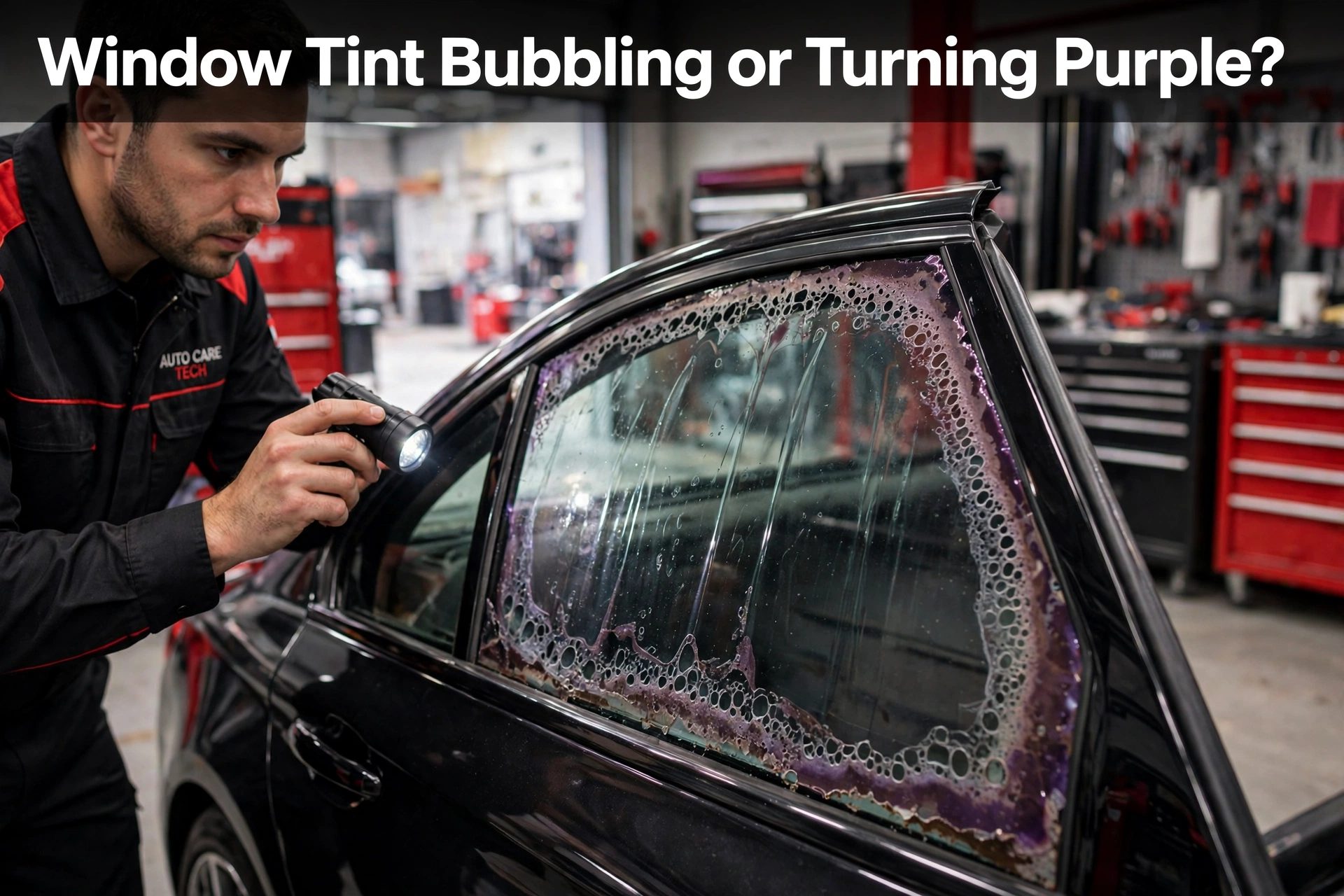
Quick Answer: Window tint bubbles, turns purple, or peels mainly because of cheap dyed film breaking down under UAE sun, poor installation (dust, moisture, weak adhesive), or age. Small water bubbles in a new tint are normal and clear within days to weeks, but bubbles, purple colour, or peeling on older tint cannot be repaired and the film needs professional removal and replacement. To avoid it, choose quality carbon or ceramic film with a written warranty and have it installed by a professional.
Few things make a car look neglected faster than window tint that is bubbling, turning purple, or peeling at the corners. It is one of the most common complaints we hear in Sharjah, and almost always the same story: a cheap tint job, a couple of hot summers, and film that looks ten years old after two.
Here is why window tint bubbling and discolouration happen, what is normal, and what to do about it.
What Causes Window Tint to Fail
Window tint is a layered film held to the glass by an adhesive. It can fail in three main ways:
The dye breaks down. Cheap dyed film uses organic dyes that degrade under UV light. As they break down, the film changes colour, usually to purple or brown, and loses its heat-blocking ability.
The adhesive fails. Heat and age weaken the glue layer. Parts of the film lift away from the glass, forming bubbles, or the edges start to peel.
Installation faults. Dust, hair, or moisture trapped during installation can create bubbles, specks, or weak bonding that gets worse over time.
Sharjah’s year-round UV and high temperatures accelerate all three. Film that might last a decade in a mild climate can fail in a fraction of that time here if it is poor quality.
Why It Matters
Failing tint is not just cosmetic. A purple, bubbled film often blocks less heat and UV than when new. Bubbles and haze can distort your view, particularly at night or in glare, which is a safety concern, especially on the rear window.
It can also affect resale value. Buyers read faded, peeling tint as a sign of poor maintenance. And the longer it stays on, the harder and more expensive it becomes to remove properly, because aged adhesive bonds harder to the glass.
Bubbles: Normal or a Problem?
Not all bubbles mean failure. It depends on when they appear.
Normal bubbles (new tint): Small water bubbles or a slightly hazy look can appear after installation while the moisture used during application evaporates. These typically clear up within days to a few weeks, depending on heat and film type. Don’t press them.
Problem bubbles:
- Bubbles that keep appearing or growing
- Bubbles on tint that has been on for months or years
- Bubbles that contain air rather than moisture
- Bubbles combined with peeling edges or discolouration
These indicate adhesive failure or poor installation and will not go away on their own. The film needs replacing.
Common Causes of Purple and Faded Tint
Cheap dyed film. This is the most frequent cause by far. Low-cost dyes have limited UV stability and change colour within a couple of years in strong sun.
Low-quality or unbranded film. Film with poor UV inhibitors and weak adhesives fails early, even if sold as “premium.”
Age. Even good dyed film eventually degrades, though quality film lasts far longer.
Heat and parking conditions. Cars parked outdoors in direct sun see the fastest degradation.
Harsh cleaning products. Ammonia-based glass cleaners can attack the film and adhesive over time.
Can Bubbling, Purple or Peeling Tint Be Repaired?
Honestly, almost never. Once the dye has degraded or the adhesive has failed, there is no reliable repair. Pricking bubbles with a needle or re-pressing film might hide a single bubble temporarily, but the underlying problem continues and usually returns.
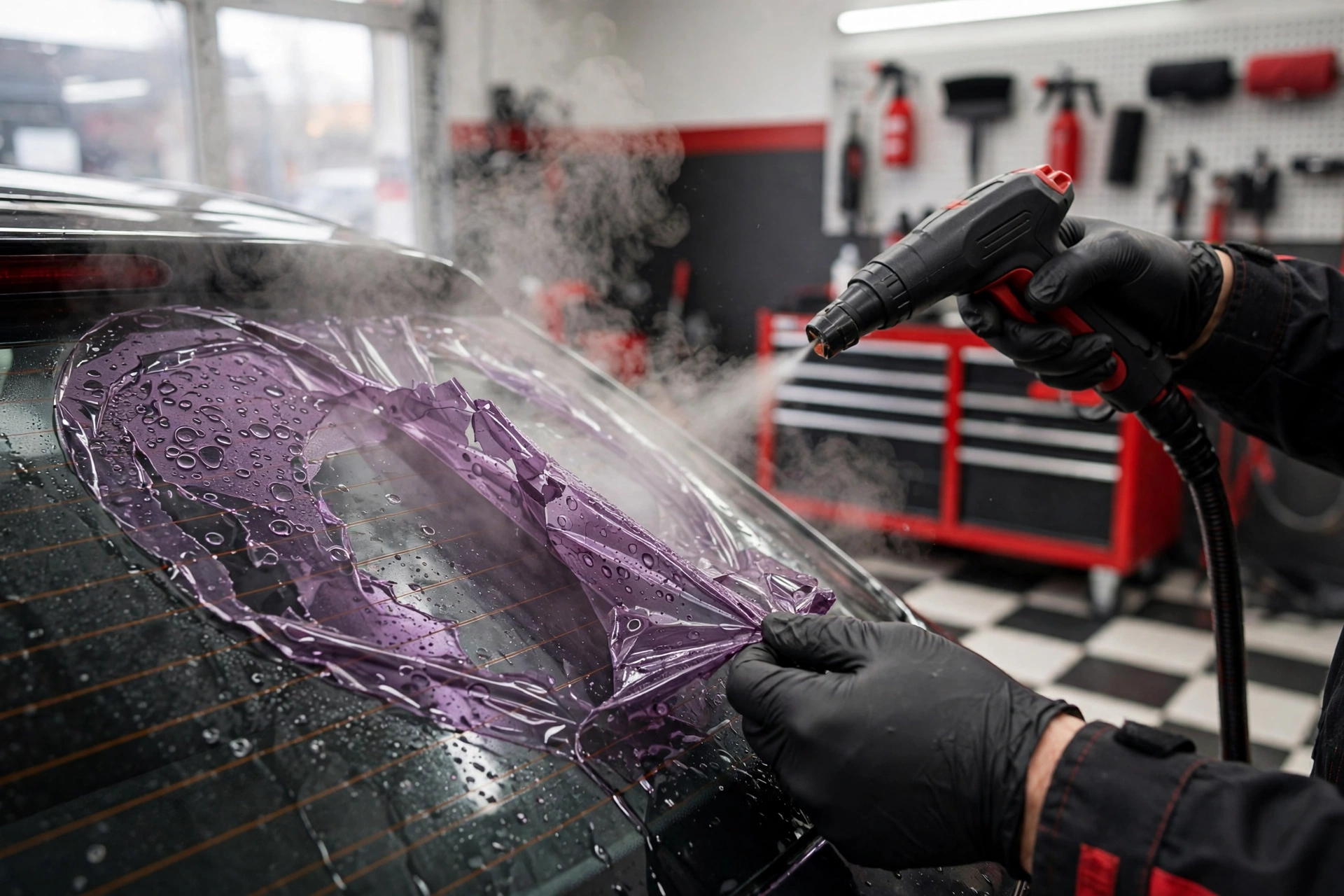
The only proper fix is professional removal and replacement with quality film. That means stripping the old film completely, cleaning off every trace of adhesive, and installing new film on clean glass.
Why Removal Should Be Left to Professionals
Removing old tint looks simple, but it carries real risks. Aggressive scraping can scratch the glass, and careless use of heat or steam can damage the rear window’s defroster lines, which are bonded to the inside surface.
Old adhesive can leave a stubborn, sticky residue that needs careful cleaning. A professional uses the right steam, solvents, and blades to lift the film and residue without harming the glass or the defroster grid. This matters, because a damaged defroster is a costly repair that cheap removal can easily cause.
Important Factors to Consider Before Replacing
Film type. Choose carbon or ceramic rather than dyed, so the problem doesn’t return.
Legal limits. UAE rules permit tint up to a set darkness on side and rear windows, while the windscreen must remain clear. Make sure the new film complies.
Warranty. Insist on a written warranty covering fading, bubbling, and peeling.
Installation conditions. Ask whether the work is done in a clean, enclosed bay rather than outdoors.
Total cost. Factor in removal as well as new film. A cheap film that fails costs you twice.
Best Practices to Prevent Tint Problems
Choose quality carbon or ceramic film from a reputable manufacturer, and get its specifications and warranty in writing. Have it installed by a professional in a clean environment.
After installation, leave the windows up for the period your installer recommends, usually a few days, to allow the film to cure. Clean only with ammonia-free glass cleaner and a soft microfibre cloth. Avoid scratching the film with seat belts, stickers, or sharp objects.
Use a windscreen sunshade and covered parking where possible to reduce cumulative heat and UV load.
How Professional Services Help
A professional shop starts with glass preparation, cleaning thoroughly so no dust or oil sits beneath the film. They shape and heat-shrink the film to match curves, apply it with a controlled technique, and inspect for defects before handover.
When replacing failed tint, professionals also handle the safe removal of old film and adhesive, protecting the glass and defroster lines. They can recommend a film that suits your budget and the UAE climate, and stand behind the work with a warranty.
Why Choose Alfaan Auto Care
Alfaan Auto Care installs and replaces window tint with the same care we bring to all our protective services. We prepare the glass properly, remove old film safely, and fit quality film suited to UAE heat, always within legal limits.
We will tell you honestly whether your existing film can last or needs replacing, and recommend a film based on how you use your car, not simply the most expensive option.
Our Service Process
- Free inspection of your existing tint and glass
- Honest recommendation: keep, repair, or replace
- Safe removal of old film and adhesive residue
- Thorough glass cleaning and preparation
- Precision installation of quality film within legal limits
- Final inspection and aftercare guidance
Frequently Asked Questions
Why is my window tint bubbling?
New tint may show small moisture bubbles that clear within weeks. Bubbles on older tint usually mean the adhesive has failed or the installation was poor, and the film needs replacing.
Why does window tint turn purple?
The dye in cheap dyed film breaks down under UV light, shifting the colour to purple or brown. Quality carbon or ceramic film resists this much better.
Can bubbling tint be fixed without replacing it?
Rarely. Pricking or pressing bubbles might hide them briefly, but the underlying adhesive or dye failure remains. Replacement is the reliable fix.
How long should window tint last in Sharjah?
It depends on film quality. Cheap dyed film can fail within a couple of years, while quality carbon and ceramic film is designed to last much longer and usually carries a warranty.
Is it safe to remove old tint myself?
It carries risk. Scraping can scratch glass and careless heat or steam can damage rear defroster lines. Professional removal is safer.
How long does it take to replace window tint?
Removal and replacement for a full car typically takes a few hours, depending on the vehicle and the condition of the old film.
Conclusion
Window tint bubbling, turning purple, or peeling is almost always the result of cheap film, poor installation, or UAE sun taking its toll. Small bubbles on new tint are normal, but problems on older tint need replacement, not repair. Choose quality film, install it professionally, and you will avoid paying for the same job twice.
Get Your Tint Fixed Properly
Tired of bubbling or faded tint? Call Alfaan Auto Care at +971528105044 or send us a WhatsApp message for a free inspection and quote on removal and replacement.