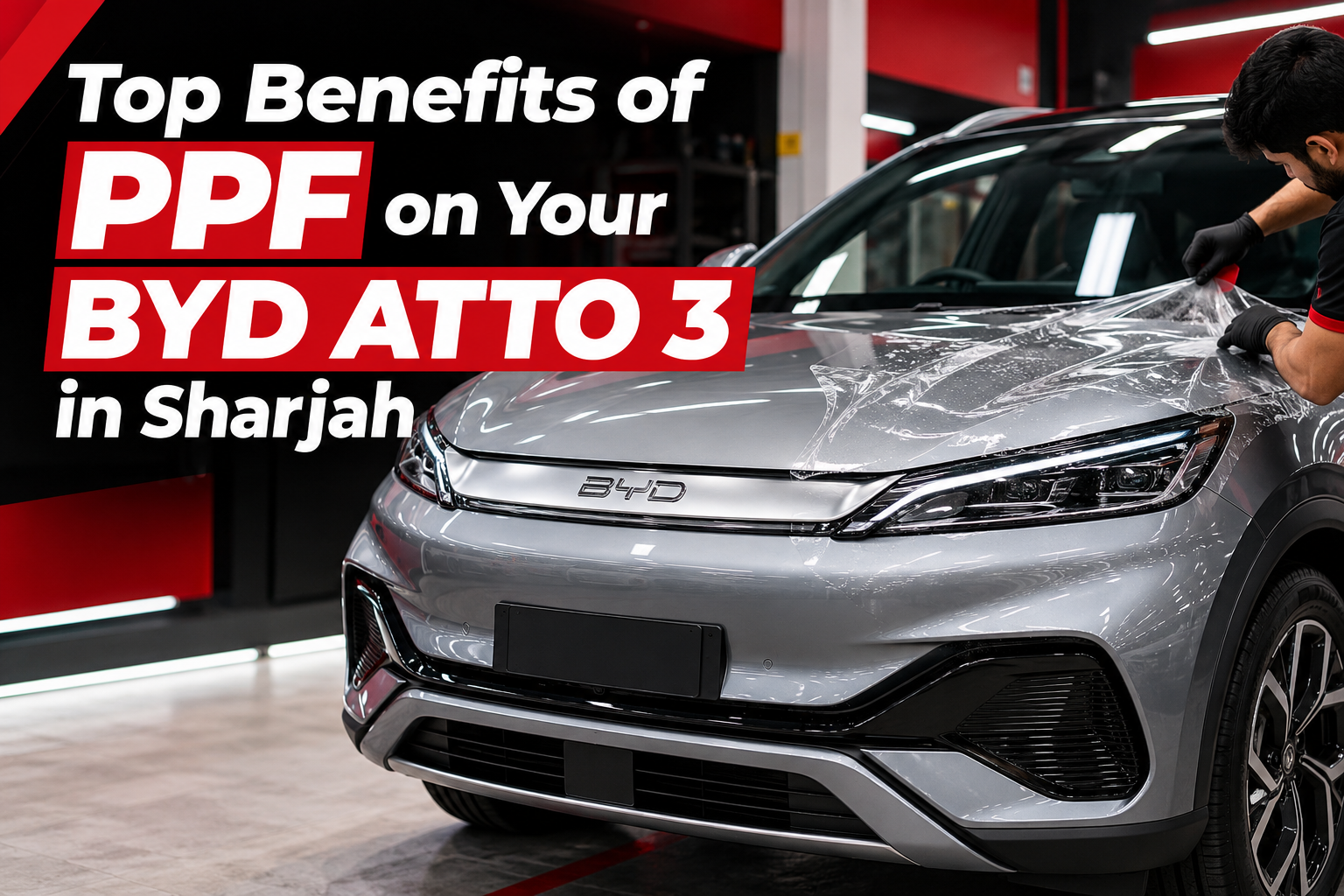
Quick Answer: Installing PPF on your BYD Atto 3 in Sharjah protects the paint from stone chips, sand abrasion, UV fading, and everyday scratches, while self-healing film keeps the finish looking fresh. It also guards EV-specific wear points such as the charging port area and door edges, makes washing easier, and helps preserve resale value. Most owners start with front-end coverage (bonnet, bumper, mirrors, fenders, headlights) and expand to full body if they want complete protection. A professional installer should cut the film precisely around sensors and cameras and back the work with a written warranty.
The BYD Atto 3 has become one of the most common electric SUVs on Sharjah’s roads. It is practical, efficient, and priced to appeal to families and daily commuters, which also means most of them are driven hard: school runs, long highway commutes, and outdoor parking all year round.
That daily use is exactly what puts the paint at risk. If you are looking at BYD Atto 3 PPF in Sharjah, here is what paint protection film actually does for this car, where it matters most, and what to check before you book.
What Is PPF and How Does It Suit the BYD Atto 3
Paint protection film (PPF) is a clear, durable polyurethane (TPU) film that is applied over your car’s factory paint. It absorbs the impact of stone chips, road debris, and light abrasion before they reach the clear coat, and it is almost invisible once installed correctly.
Quality film also has a self-healing top coat. Light scratches and swirl marks in the film’s surface fade when warmed by sunlight or warm water, which works especially well in Sharjah’s climate.
On the Atto 3, the film is cut to match the body’s curves and wrapped around edges, so it follows the car’s shape rather than sitting on top of it. Protecting paint is the film’s job, not changing how the car works, so it should never interfere with sensors, cameras, or the charging system when installed by someone who knows what they are doing.
Why Paint Protection Matters for Atto 3 Owners in Sharjah
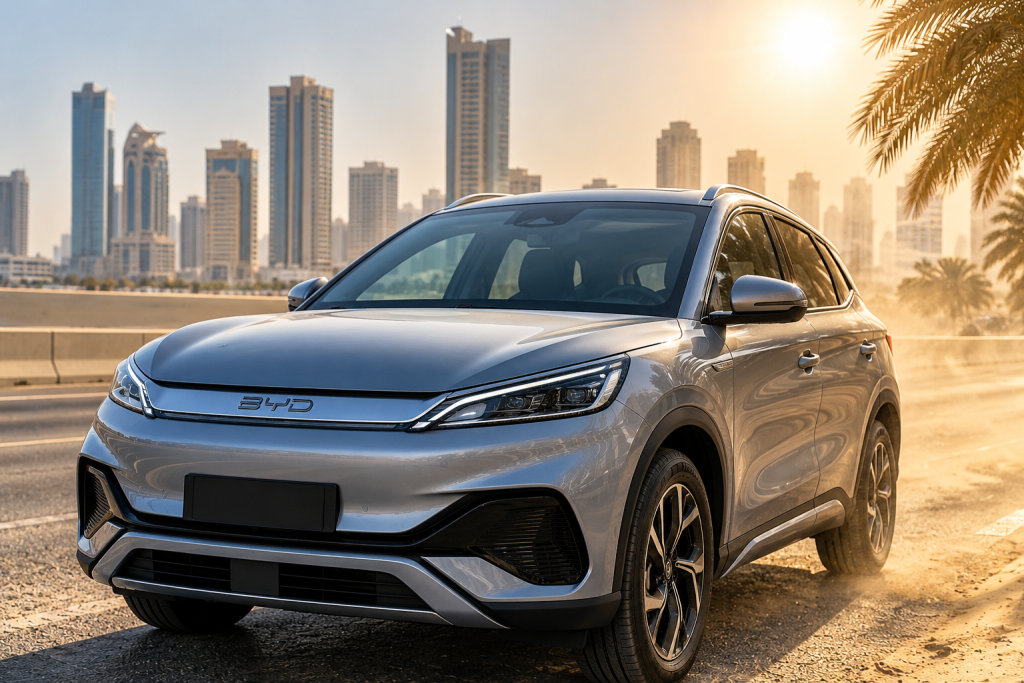
A few conditions in Sharjah make paint protection more than a luxury.
Highway debris. Routes like Emirates Road and Sheikh Mohammed Bin Zayed Road carry loose gravel and construction debris. At highway speed, a small stone can chip the bonnet or front bumper instantly.
Sand and dust. Fine sand settles on parked cars daily. Wiping or washing it incorrectly creates swirl marks that dull the finish.
Heat and UV. Intense sun and high surface temperatures accelerate clear coat fading and oxidation, particularly on the bonnet and roof.
Outdoor parking. Many owners park outside, which means constant exposure to sun, dust, bird droppings, and hard water spots.
An Atto 3 used for daily commuting faces all four. Without protection, the front end typically shows chip marks within the first year or two.
Top Benefits of PPF on Your BYD Atto 3
1. Stone chip and road debris protection
This is the headline benefit. PPF is thick enough to absorb the impact of small stones that would otherwise chip the paint. The front bumper, bonnet leading edge, headlights, and mirror caps take the most hits on any SUV, and the film stops that damage before it reaches the paint.
2. Protection from sand abrasion and swirl marks
The film’s hard, smooth top coat resists the light abrasion caused by dust and sand. Fine marks that appear on the film during washing or wiping can heal on their own with heat, rather than becoming permanent marks in your paint.
3. UV and fade resistance
Sharjah’s UV load slowly breaks down unprotected clear coat. PPF adds a UV-resistant layer that helps the paint keep its colour depth and gloss, especially on horizontal panels like the bonnet and roof that take the most sun.
4. Self-healing finish for daily use
Daily driving creates fine marks from door handles, bags, zips, and car washes. Self-healing film lets many of those marks fade by themselves, so the car looks cleaner for longer without constant polishing. Deep cuts will not heal, but light marks, which are the most common, do.
5. Protection for EV-specific wear points
This is where an electric SUV differs from a petrol car. Owners handle the charging cable regularly, and the area around the charging port can pick up scuffs from plug heads, cable ends, and fingernails over time. A small piece of film in this area is a low-cost way to prevent visible wear.
Other high-contact areas worth protecting include door edges, door handle cups, the rear bumper top and boot lip (used when loading luggage), and door sills.
6. Easier cleaning
PPF has a smooth, hydrophobic top coat. Dirt, dust, and water release more easily, so washing takes less effort and the paint is touched less aggressively. In a dusty environment, that reduces the risk of new swirl marks.
7. Helps preserve resale value
The Atto 3 is popular on the used market, and buyers inspect paint closely. A car with a clean, chip-free front end and documented protection stands out against one with a visibly chipped bonnet and faded paint. PPF does not guarantee a price, but it protects one of the first things buyers judge.
8. Satin or gloss finish options
Standard gloss film keeps the factory look. If you prefer a subtler satin appearance, satin finish film is available, protecting the paint while giving the car a more distinctive look.
9. Reversible protection
PPF can be professionally removed without damaging healthy factory paint. If you sell the car, upgrade, or want to renew the protection, the film can be taken off and replaced, leaving the original paint underneath in good condition.
Which Parts of the Atto 3 Should You Protect
Not every owner needs full-body coverage. Here is how most options compare:
| Coverage | What it protects | Best for |
|---|---|---|
| Front-end package | Bonnet, front bumper, fenders, mirrors, headlights | Highway commuters on a budget |
| Full front + high-contact areas | Front end plus door edges, handle cups, charging port area, rear bumper top, sills | Daily family use |
| Full body | All painted panels | Maximum protection and owners keeping the car long term |
If you are unsure, the front end gives the largest return on investment. You can add other panels later.
Common Problems and Challenges
Choosing low-quality film. Cheap film can yellow, crack, or lack a proper healing top coat. Always ask for the brand, product line, and warranty.
Poor cutting and installation. Visible seams, lifted edges, and bubbles usually come from rushed installation, not the film itself.
Film over sensors and cameras. The Atto 3 has parking sensors, cameras, and driver-assistance components. A careless installer who covers or distorts the wrong area can affect how these systems see. Installation should leave sensor and camera zones clear or be handled carefully.
Skipping paint preparation. Film locks in whatever is underneath. Swirl marks, dirt, and chips should be dealt with before installation.
Expecting it to be indestructible. PPF is tough but not invincible. Deep cuts and heavy impacts can still damage it.
Poor aftercare. Washing too early, using pressure washers near edges, or applying wax can cause lifting or haze.
Important Factors to Consider Before Booking
Film quality and warranty. Choose genuine TPU film from an established manufacturer, with a written warranty covering yellowing, cracking, and peeling.
Installer experience with EVs. Ask if they have worked on electric SUVs and how they handle sensors, cameras, and charging areas.
Coverage choice. Match the package to your driving. Highway commuters benefit most from front-end protection.
Paint condition. Newer cars need only decontamination and inspection. Cars with swirl marks may need correction first.
Finish. Choose gloss for the original look or satin for a subtler change.
Timing. The best time is as soon as possible after delivery, before chips and swirl marks accumulate.
Best Practices and Expert Recommendations
Book PPF in the first weeks of ownership. Fresh paint is easier to protect than paint that has already been chipped.
Ask the installer to inspect the paint under proper lighting, even on a brand-new car. Transport and dealership handling can leave marks that are worth catching before the film goes on.
After installation, avoid washing for at least 48 hours, and follow your installer’s guidance on curing, which can be longer. Wash by hand using the two-bucket method and a pH-neutral shampoo, keep pressure washers away from edges, and avoid automatic brush washes. Remove bird droppings and insect residue promptly.
Many owners combine PPF with ceramic coating over the film or on unfilmed panels for easier cleaning and extra gloss.
How Professional Installation Helps
PPF installation is a skilled job. The film must be positioned precisely, stretched and heat-formed around curves, trimmed to follow body lines, and finished at the edges so no original paint shows.
A professional also works in a clean, controlled space, because dust under the film shows as permanent specks. On a car like the Atto 3, the installer should understand where sensors, cameras, and trim panels sit, and adapt the pattern accordingly. A written warranty and a follow-up check give you someone accountable if anything lifts or bubbles.
Why Choose Alfaan Auto Care
Alfaan Auto Care installs PPF alongside ceramic coating, paint correction, tinting, and detailing, so your car’s paint is prepared properly before film goes on. We have worked on daily drivers and luxury vehicles across Sharjah for over 500 customers, using premium-grade film selected for UAE heat and UV.
We recommend coverage based on how you drive and park, not the most expensive package, and we explain what the film will and will not do before you commit.
Our Service Process
- Free consultation and coverage recommendation for your Atto 3
- Paint inspection under proper lighting
- Decontamination wash and correction where needed
- Precision film cutting and fitting, with care around sensors and cameras
- Careful installation, heat-forming, and edge finishing
- Final quality inspection
- Aftercare instructions and warranty details
Frequently Asked Questions
Is PPF worth it for a BYD Atto 3 in Sharjah? For most owners, yes. Highway debris, sand, and UV exposure damage unprotected paint quickly, and PPF prevents chips and fading while helping preserve resale value.
Which parts of the Atto 3 should I cover first? The front bumper, bonnet, fenders, mirrors, and headlights take the most damage. Many owners add door edges, handle cups, the charging port area, and the rear bumper top later.
Does PPF interfere with the Atto 3’s sensors and cameras? It should not when installed correctly. A skilled installer cuts the film to leave sensor and camera areas clear or handles them carefully.
How long does PPF last on an Atto 3? Quality film can last many years in UAE conditions and usually comes with a manufacturer warranty. Actual lifespan depends on the film, installation, and maintenance.
Can I install PPF on a new Atto 3 right after delivery? Yes, and it is the ideal time. Do a paint inspection first so any transport marks can be addressed before installation.
Is PPF better than ceramic coating for an electric SUV? They do different jobs. PPF protects against chips and scratches, while ceramic coating adds gloss, UV resistance, and easier cleaning. Many owners use both.
Can PPF be removed later? Yes. Professional removal leaves healthy factory paint underneath in good condition.
Conclusion
PPF on your BYD Atto 3 protects the paint where Sharjah’s roads and climate do the most damage, from stone chips on the front end to scuffs around the charging port. With self-healing film, easier cleaning, and better resale prospects, it is a practical investment for a car many owners keep for years. Choose quality film, a skilled installer, and a coverage level that fits how you drive.
Get a Free PPF Quote for Your BYD Atto 3
Ready to protect your Atto 3? Call Alfaan Auto Care at +971528105044 or send us a WhatsApp message for a free consultation and quote.